Process Equipment Used in Palm Oil Refining and Edible Oil Processing in Indonesia
Indonesia is one of the world's major palm oil-producing countries, making palm oil refining and downstream processing an important part of its agricultural and industrial economy. Indonesia's Central Statistics Agency (BPS) identifies palm oil as an important plantation commodity because of its role in producing vegetable oil for industry.
As Indonesian producers increasingly focus on refining, distillation, and value-added palm oil products, efficient process equipment becomes essential. Equipment selection in palm oil refining depends on feedstock characteristics, refining route, throughput, operating temperature, vacuum requirements, vapour load, heat-integration opportunities, product specifications, and required degree of automation.
How Does Palm Oil Refining Work in Indonesia?
A typical palm oil refining process follows:
Crude Palm Oil (CPO) Storage → Degumming → Deacidification → Bleaching → Filtration → Deodorization → Cooling → Distillation → Final Filtration → Storage
Palm oil refining generally follows either chemical refining or physical refining, depending on feedstock characteristics, refinery configuration, and product requirements. Equipment selection and process sequence therefore vary between plants.
The exact configuration depends on CPO quality, refinery capacity, product specifications, and whether chemical or physical refining is used.
The FAO explains that edible-oil refining generally uses alkaline or physical refining routes to remove free fatty acids and other undesirable components.
For Indonesian palm oil processors, efficient refining is particularly important because the industry handles large volumes of CPO and produces a wide range of downstream products, including refined palm oil, palm olein, and palm stearin.
How Can Process Equipment Reduce Palm Oil Refinery Costs?
The right process equipment can significantly reduce palm oil refinery operating costs by improving energy efficiency, minimizing oil losses, reducing downtime, and maintaining consistent product quality. While the initial equipment investment may be higher, efficient systems can deliver measurable savings over their operating life.
|
Cost Area |
Equipment Approach |
Typical Cost Impact / Potential Saving |
|
Energy |
Heat exchangers and heat recovery systems |
Can reduce heating energy requirements by 10–30%, depending on process integration |
|
Electricity |
High-efficiency vacuum pumps and vacuum boosters |
Can reduce vacuum-system power consumption by 10–25% |
|
Oil Losses |
Efficient filtration, separation, and recovery systems |
Can improve oil recovery and reduce product losses by 1–3% |
|
Maintenance |
Reliable pumps, valves, sensors, and automated controls |
May reduce maintenance-related costs by 10–20% |
|
Downtime |
Condition monitoring and automated process control |
Can reduce unplanned downtime and associated production losses |
|
Labour |
Automated dosing, control, and monitoring systems |
Can reduce manual intervention and improve operator productivity |
|
Product Quality |
Precise temperature, pressure, vacuum, and process controls |
Helps minimize off-specification batches and reprocessing costs |
*(Indicative range; actual savings depend on plant configuration and operating conditions.)
For a medium-sized palm oil refinery, energy, maintenance, oil losses, and downtime can represent a substantial portion of operating expenses. For an individual refinery, the economic impact should be calculated using actual throughput, operating hours, steam and electricity consumption, oil losses, maintenance expenditure, and product recovery data.
Similarly, reducing oil losses by just 1% can have a significant financial impact because the value of recovered palm oil can quickly exceed the additional operating cost of an efficient recovery or filtration system.
The actual savings will depend on refinery capacity, operating hours, equipment efficiency, energy prices, feedstock quality, and existing process conditions.
What Are the Main Process Equipment Used in Indonesian Palm Oil Refineries?
1. CPO Storage Tanks and Transfer Pumps
Crude palm oil requires controlled storage before refining. Storage tanks are generally equipped with heating systems to maintain suitable viscosity and prevent unwanted solidification.
|
Refining Stage |
Primary Function |
Typical Equipment |
|
CPO Storage |
Storage and temperature control |
Storage tanks, heating coils, pumps |
|
Degumming |
Phospholipid removal |
Degumming vessels, mixers, dosing systems, separators |
|
Neutralization |
FFA removal |
Neutralization vessels, dosing systems, centrifuges |
|
Bleaching |
Pigment and impurity adsorption |
Bleaching vessels, vacuum systems, agitators |
|
Filtration |
Removal of spent bleaching earth |
Pressure leaf filters, polishing filters |
|
Deodorization |
Removal of volatile compounds and FFA |
Deodorizer, steam system, vacuum system, condensers |
|
Heat Recovery |
Thermal-energy integration |
Heat exchangers |
|
Distillation |
Separation into olein/stearin |
Crystallizers, chillers, filter presses |
|
Final Filtration |
Product polishing |
Fine filtration systems |
|
Storage |
Finished-product handling |
Storage tanks and transfer pumps |
Temperature control is particularly important for palm oil because its physical characteristics change with temperature.
For Indonesian refineries, storage and transfer systems should also be designed around plant throughput, tank capacity, feedstock characteristics, and continuous processing requirements.
2. Degumming Equipment
Degumming removes phospholipids, gums, and other impurities from crude oil. Depending on the refining route, water, phosphoric acid, or citric acid may be used.
Typical equipment includes:
- Degumming vessels
- High-shear mixers
- Acid dosing systems
- Static mixers
- Heat exchangers
- Centrifugal separators
Effective degumming improves downstream refining performance and helps protect subsequent equipment.
3. Neutralization Equipment
Chemical refining can use caustic soda to neutralize free fatty acids and separate them as soapstock.
A neutralization system can include:
- Neutralization reactors
- Alkali dosing systems
- Mixers
- Centrifuges
- Washing systems
- Vacuum dryers
In physical refining, free fatty acids are primarily removed through steam stripping during deodorization. The FAO identifies both alkaline and physical refining as established routes for edible oils.
4. Bleaching Systems
Bleaching removes pigments and other trace impurities through adsorption, commonly using activated bleaching earth.
A typical bleaching section consists of:
- Bleaching vessels
- Vacuum systems
- Bleaching-earth dosing equipment
- Agitators
- Heating systems
- Pressure or leaf filters
Vacuum operation can help reduce oxidation during elevated-temperature processing.
5. Filtration Equipment
After bleaching, spent bleaching earth must be separated from the oil. Filtration performance affects product recovery, clarity, cycle time, and oil losses.
Common filtration equipment includes:
- Pressure leaf filters
- Sparkler filters
- Cartridge filters
- Bag filters
- Fine polishing filters
The right filtration system should provide efficient solids removal while minimizing oil retained in the filter cake.
6. Deodorization Equipment
Deodorization is one of the most important stages in edible oil refining. It uses elevated temperature, vacuum, and stripping steam to remove volatile compounds, odour-causing substances, and free fatty acids.
Typical equipment includes:
- Deodorizer towers
- Steam injection systems
- Heat exchangers
- Fatty acid condensers
- Vacuum pumps
- Vacuum boosters
- Cooling systems
Stable vacuum conditions are essential for efficient stripping and process control.
7. Heat Exchangers and Heat Recovery Systems
Heat management is an important consideration for Indonesian edible oil processing plants because refining involves multiple heating and cooling stages.
Heat exchangers can be used for:
- CPO preheating
- Degumming temperature control
- Bleaching heating
- Deodorization feed heating
- Refined oil cooling
- Heat recovery
Recovering heat from hot process streams and transferring it to incoming cold streams can reduce steam and thermal-energy requirements.
For integrated projects, process equipment and heat-transfer solutions can be designed around specific process conditions and plant requirements.
8. Distillation Equipment for Palm Olein and Palm Stearin
Palm oil can be separated into different fractions according to their melting characteristics. Controlled cooling and evaporation followed by filtration can produce liquid and solid fractions.
Typical equipment includes:
- Evaporator
- Cooling systems
- Agitators
- Chillers
- Filter presses
- Filtration systems
The process can produce palm olein, widely used as a liquid cooking oil, and palm stearin, which is suitable for applications requiring harder fat fractions.
This downstream processing capability is particularly relevant to Indonesia's palm oil sector because distillation allows processors to create products for different food and industrial applications.
How Do Vacuum Systems Improve Edible Oil Processing in Indonesia?
Vacuum systems can support several refinery operations, including:
- Deodorization
- Oil drying
- Bleaching
- Degassing
- Evaporation
- Vacuum distillation
The vacuum system should be selected according to operating pressure, vapour load, temperature, condensable content, and required capacity. For deodorization and other high-vacuum edible-oil applications, vacuum-system design should also consider non-condensable gas load, stripping-steam load, condensable vapours, operating temperature, corrosion potential, condenser configuration, and required ultimate/operating pressure.
For Indonesian palm oil refineries, correctly sized vacuum equipment can help improve process stability and energy efficiency, particularly in continuous operations with significant vapour loads.
ECOPROCESS provides industrial vacuum pumps and vacuum systems for applications involving evaporation, drying, filtration, distillation, and degassing.
How Is the Vacuum System Selected for Palm Oil Refining?
Vacuum equipment should not be selected based on pump capacity alone. The system should be engineered based on operating pressure, pumping speed, vapour load, condensable vapours, stripping steam, gas composition, temperature, corrosion conditions, condenser performance, and required process stability.
What Should Indonesian Palm Oil Processors Consider When Selecting Equipment?
Before selecting equipment, manufacturers should evaluate the following factors to ensure reliable, efficient, and cost-effective refinery operation :
- CPO Characteristics – Equipment should be selected based on FFA, moisture, phospholipids, colour, impurities, and other feedstock characteristics.
- Plant Capacity – Equipment capacity should match current CPO throughput while allowing for future production expansion.
- Refining Method – The equipment configuration should suit the selected chemical or physical refining process.
- Product Specification – Process equipment should achieve the required colour, odour, FFA level, stability, and final product quality.
- Vacuum Requirements – Vacuum pumps and systems should be sized according to required pressure, vapour load, condensables, and operating conditions.
- Energy Integration – Heat exchangers and process systems should be designed to maximize heat recovery and reduce energy consumption.
- Material Compatibility – Equipment materials should be suitable for food-contact applications and resistant to the process conditions and chemicals involved.
- Automation – Instrumentation, PLC controls, and process monitoring should provide accurate control of critical operating parameters.
- Maintenance Requirements – Equipment should provide easy access for inspection, cleaning, servicing, and routine maintenance.
- Lifecycle Cost – Selection should consider not only initial capital cost but also energy, consumables, maintenance, downtime, and long-term operating costs.
Equipment selection becomes particularly important because Indonesian palm oil processors often operate at large CPO volumes and may integrate refining, distillation, and downstream processing. The right equipment can support energy efficiency, lower utility consumption, product diversification, export-quality production, automation, process reliability, and effective waste/by-product management while maintaining consistent product quality.
The FAO also emphasizes that crude-oil quality is influenced by factors such as free fatty acids, oxidation products, and colour, making upstream processing and equipment selection important for refining performance.
How Can ECOPROCESS Support Palm Oil and Edible Oil Processing in Indonesia?
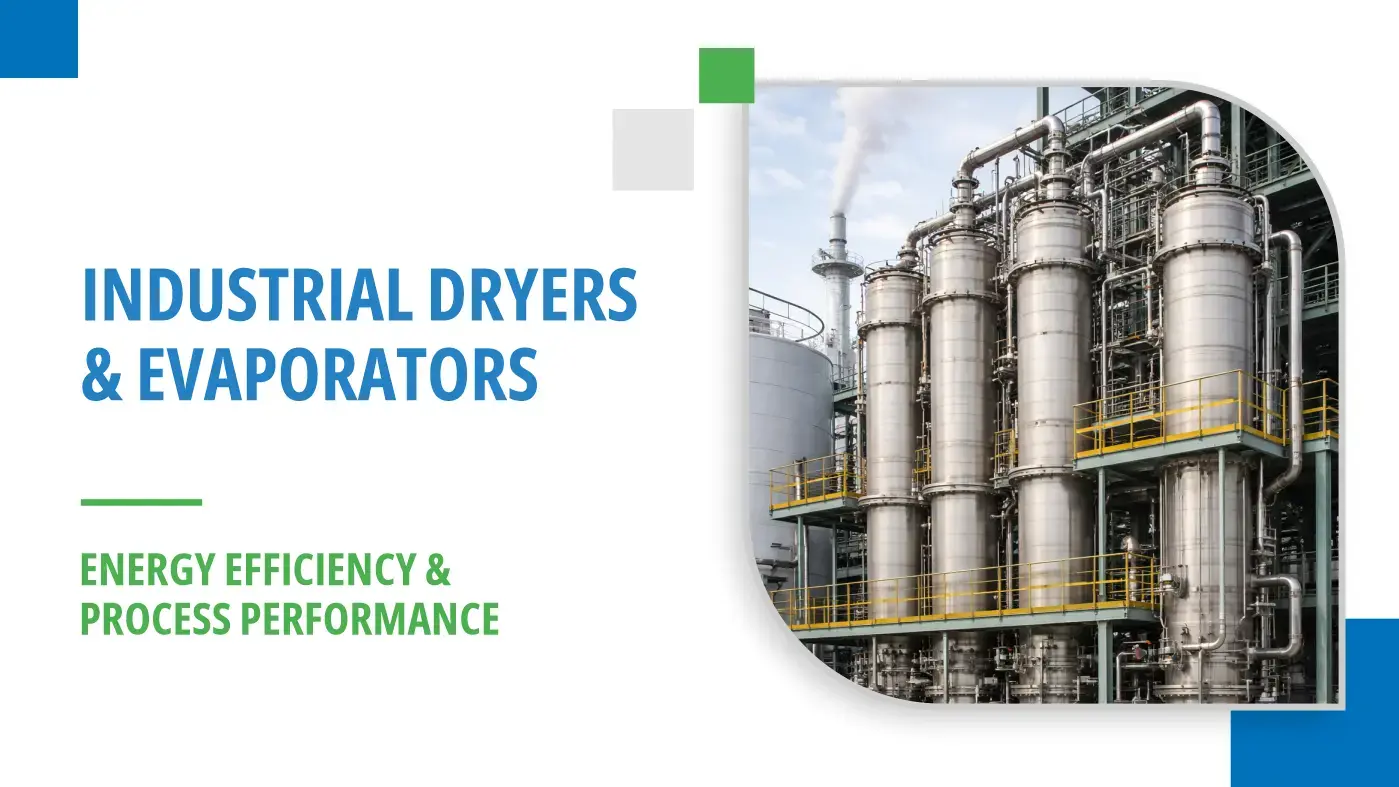
ECOPROCESS Solutions provides engineered process and vacuum solutions for industrial applications. Its portfolio includes vacuum pumps, vacuum boosters, heat exchangers, evaporators, dryers, reactors, distillation systems, extraction equipment, and customized process skids.
For Indonesian edible oil processors, these technologies can support:
- Vacuum generation
- Heat transfer
- Drying
- Separation
- Process automation
- Customized system integration
ECOPROCESS can support projects from process assessment and equipment selection through engineering, integration, commissioning, and after-sales support.
For broader requirements, manufacturers can explore ECOPROCESS process solutions and its range of customized industrial equipment.
What Are the Key Trends in Indonesia's Edible Oil Processing Industry?
Energy and Heat Integration
Indonesian processors are increasingly focused on improving energy efficiency through heat recovery, optimized heating, and efficient vacuum systems.
More Efficient Deodorization Vacuum Systems
Modern vacuum systems are selected according to actual process pressure, vapour load, condensable streams, and energy requirements rather than pump capacity alone.
Automated Refining Control
Automated temperature, pressure, flow, dosing, and vacuum controls can help maintain consistent processing conditions and reduce manual intervention.
Integrated Process Systems
Rather than purchasing isolated machines, manufacturers can benefit from integrated systems combining pumps, vessels, heat exchangers, filters, controls, and utilities.
Integrated Distillation and Downstream Processing
Reducing energy and water consumption, minimizing waste, and improving by-product recovery are becoming increasingly important considerations for palm oil processors.
Which Palm Oil Refining Equipment Can ECOPROCESS Supply?
|
ECOPROCESS Equipment |
Palm Oil Processing Application |
|
Vacuum Pumps |
Deodorization, drying, bleaching and degassing |
|
Vacuum Boosters |
Deep-vacuum applications and higher pumping capacity |
|
Vacuum Systems |
Centralized or application-specific vacuum generation |
|
Heat Exchangers |
Feed preheating, cooling and heat recovery |
|
Distillation Systems |
Separation and purification applications |
|
Evaporators |
Concentration and separation |
|
Dryers |
Moisture removal and drying applications |
|
Process Skids |
Integrated process equipment packages |
|
Customized Process Systems |
Application-specific process integration |
Frequently Asked Questions
What equipment is required for palm oil refining in Indonesia?
Major equipment includes CPO storage tanks, pumps, degumming systems, neutralization equipment, bleaching vessels, filters, heat exchangers, deodorization systems, vacuum pumps, vacuum boosters, and distillation equipment.
How is a vacuum pump selected for palm oil refining?
Vacuum pumps maintain low pressure required for processes such as deodorization, drying, bleaching, degassing and vacuum distillation. The appropriate pump and system configuration depends on pressure, pumping speed, vapour load, condensables and process temperature.
What is the difference between chemical and physical refining?
Chemical refining uses alkali to neutralize free fatty acids, while physical refining primarily removes free fatty acids through steam stripping under vacuum during deodorization.
Why are heat exchangers important in Indonesian palm oil refineries?
Heat exchangers enable efficient heating and cooling and allow heat recovery between process streams, helping reduce thermal-energy requirements.
What equipment is used for palm oil distillation?
Distillation generally uses controlled cooling and evaporation followed by filtration to separate liquid and solid palm oil fractions.
How can ECOPROCESS help Indonesian palm oil processors?
ECOPROCESS can provide engineered vacuum and process solutions, including vacuum pumps, boosters, heat exchangers, evaporators, dryers, reactors, distillation systems, and customized process equipment.
Conclusion
Indonesia's palm oil industry requires efficient and reliable processing equipment to convert CPO into refined oils and higher-value fractions. From degumming and bleaching to deodorization, vacuum processing, heat recovery, and distillation, every stage influences product quality, recovery, energy consumption, and operating costs.
Selecting equipment according to actual Indonesian plant conditions—including CPO characteristics, production capacity, vacuum requirements, energy availability, and final product specifications—is essential for reliable operation.
Advanced vacuum systems, efficient heat exchangers, automated controls, and integrated process solutions can help Indonesian palm oil processors improve process stability while controlling operating costs.
ECOPROCESS Solutions can support manufacturers with customized vacuum and process equipment for palm oil refining and edible oil processing, designed around specific production requirements and operating conditions.