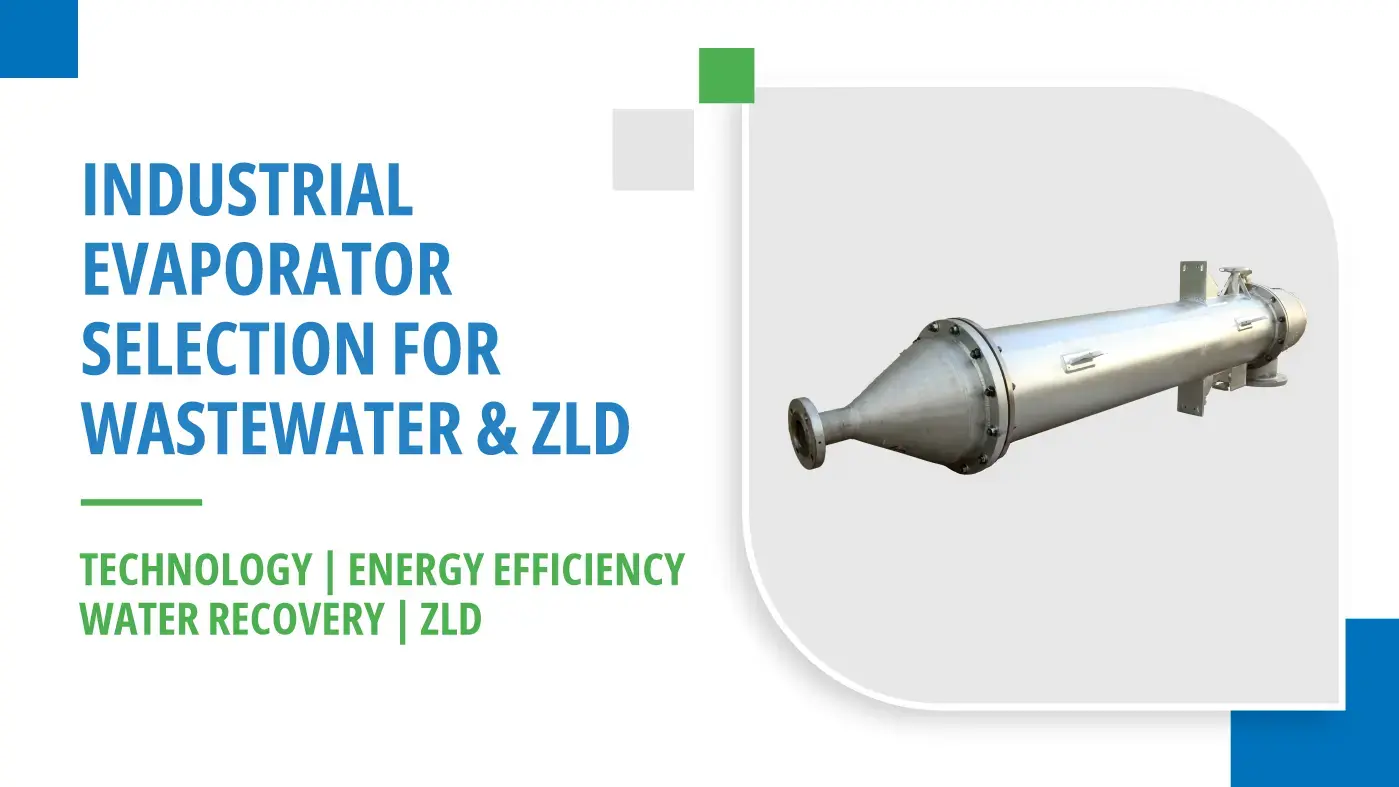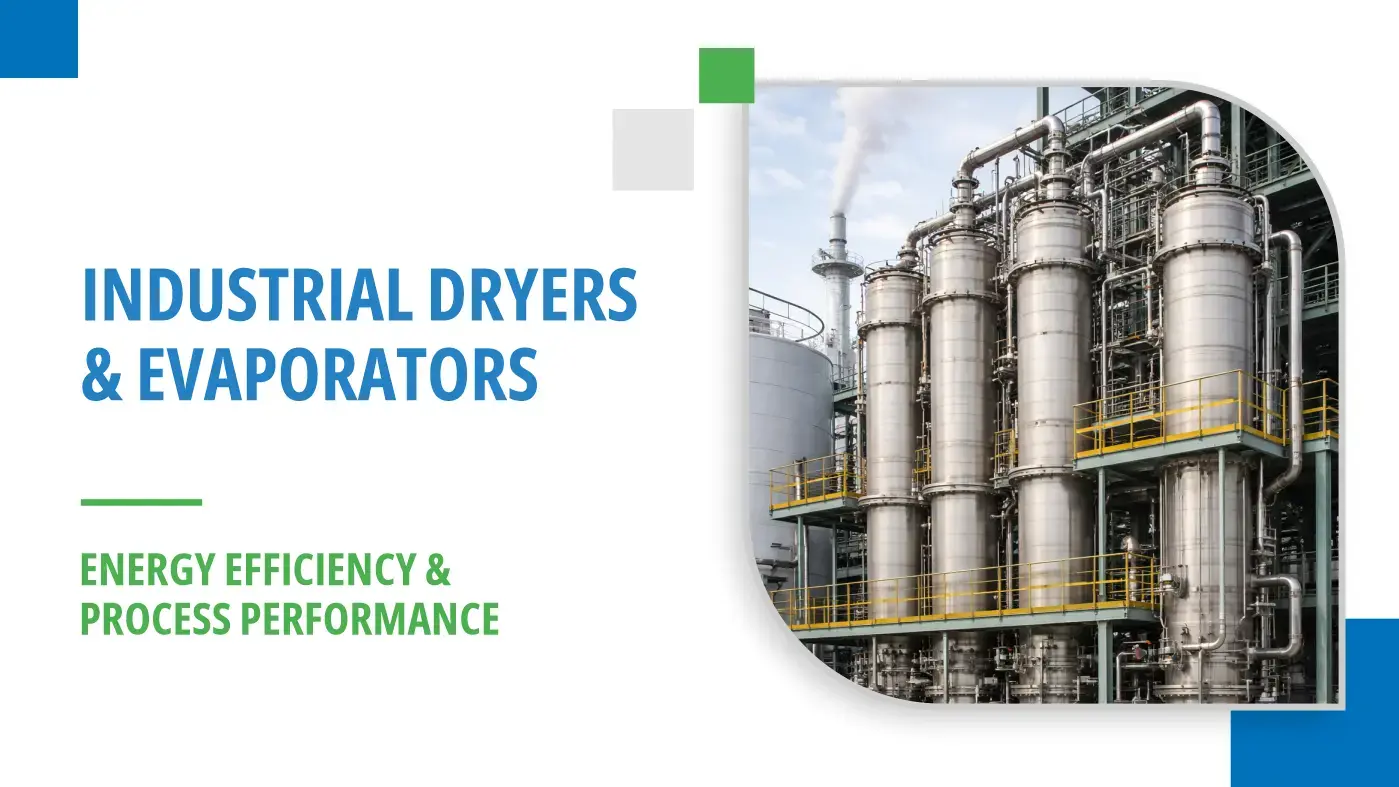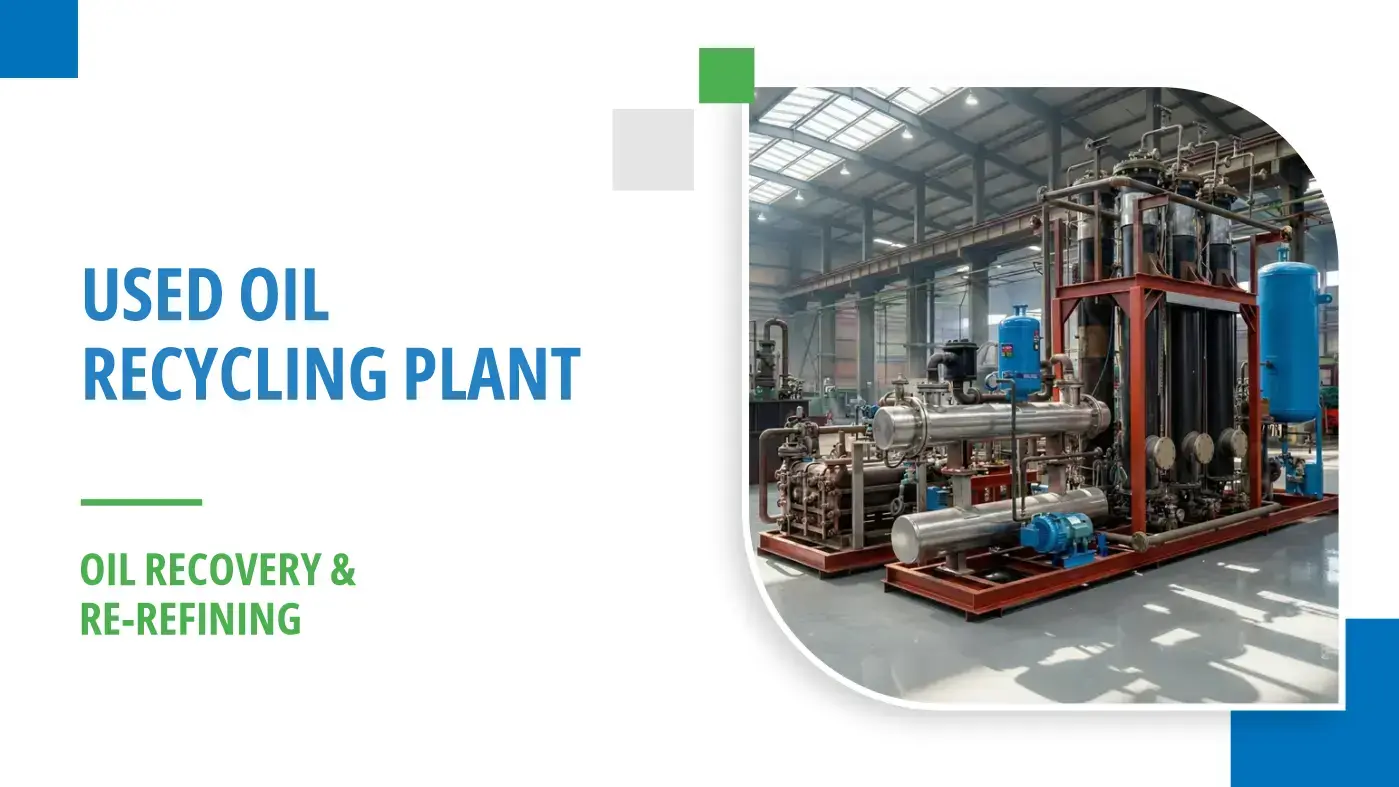
How to Choose the Right Industrial Evaporator for Wastewater and ZLD Projects
Industrial wastewater treatment increasingly focuses on water recovery, effluent-volume reduction, and compliance with discharge requirements. Rising utility costs, water-reuse targets, and the need to manage concentrated waste streams are driving interest in industrial evaporation for wastewater treatment and Zero Liquid Discharge (ZLD) systems.
Industries such as pharmaceuticals, chemicals, agrochemicals, textiles, food processing, and petrochemicals may generate wastewater with high dissolved-solids concentrations, suspended solids, organics, and scale-forming compounds. Depending on the feed characteristics and treatment objectives, an industrial evaporator can recover water as condensate while concentrating non-volatile constituents for further treatment or disposal.
Selecting an industrial evaporator involves more than matching equipment capacity to wastewater flow. Engineers must assess feed chemistry, evaporation duty, scaling potential, heat sensitivity, material compatibility, utility availability, water-recovery targets and downstream concentrate handling.
This guide explains how to evaluate evaporator technologies and compare process, energy and lifecycle requirements before selecting a system for wastewater treatment or ZLD.
How Does an Industrial Evaporator Work in Wastewater Treatment?
An industrial wastewater evaporator uses heat, often under vacuum, to separate water from concentrated wastewater. The recovered water can be collected as condensate, while salts and other non-volatile materials become increasingly concentrated.
A typical ZLD process may follow:
Pretreatment → RO → Evaporation → ATFD/Crystallization → Solid Residue
Depending on feed characteristics and recovery requirements, an industrial evaporation system may use falling film, rising film, forced circulation, multiple-effect evaporation, MVR, TVR, or specialized technologies.
ECOPROCESS Solutions provides evaporation technologies for wastewater treatment, concentration, solvent recovery, and ZLD applications. The wastewater evaporation system should always be designed as part of the complete treatment process.
What Factors Should You Consider Before Selecting an Industrial Evaporator?
The first step in evaporator selection for wastewater is detailed wastewater characterization. Two wastewater streams with identical flow rates can require different equipment because of differences in chemistry, viscosity, solids, and scaling potential.
|
Parameter |
Why It Matters |
|
Flow rate |
Determines evaporation capacity |
|
TDS |
Indicates dissolved-solids loading |
|
COD/BOD |
Helps assess organic loading |
|
Suspended solids |
Influences fouling and configuration |
|
pH and chlorides |
Important for corrosion and metallurgy |
|
Viscosity |
Affects circulation and heat transfer |
|
Scaling tendency |
Influences cleaning and equipment design |
|
Boiling point |
Determines temperature and vacuum requirements |
|
Heat sensitivity |
Helps select appropriate evaporator technology |
|
Final concentrate |
Determines downstream ATFD/crystallizer requirements |
Representative samples and reliable process data should be available before finalizing an industrial evaporator system.
How Does Wastewater Chemistry Determine the Evaporator Type?
Different evaporator technologies are suitable for different wastewater characteristics.
When Is a Falling Film Evaporator Suitable?
A Falling Film Evaporator distributes liquid over vertical heat-transfer tubes, allowing it to flow downward as a thin film while evaporation takes place.
Key advantages include:
- Short residence time
- Efficient heat transfer
- Low liquid hold-up
- Gentle evaporation
- Suitability for heat-sensitive streams
- Compatibility with multiple-effect systems
It is generally considered for relatively clean, low-to-medium viscosity streams with controlled solids loading. It can be used as an evaporator for industrial wastewater when feed characteristics are suitable.
When Is Forced Circulation Evaporation Used?
Forced Circulation Evaporators continuously circulate process liquid through the heat exchanger and can be considered for difficult wastewater streams.
Applications may include:
- High-TDS wastewater
- Concentrated brine
- High-viscosity liquids
- Scaling-prone streams
- Slurries and solids-containing wastewater
For high TDS wastewater treatment and concentrated wastewater treatment, forced circulation can provide suitable hydraulic conditions. However, scaling chemistry, concentration limits, temperature, and circulation requirements must be evaluated during design.
How Does an MEE Reduce Steam Consumption?
A Multiple Effect Evaporator (MEE) reuses vapour generated in one effect as the heating medium for the next effect operating at a lower pressure. This improves thermal efficiency and makes MEE an established evaporation technology for wastewater concentration and ZLD applications.
MEE systems can be considered for:
- Large evaporation loads
- Industrial effluent treatment
- Pharmaceutical and chemical wastewater
- Wastewater concentration
- ZLD applications
ECOPROCESS offers Multiple Effect Evaporator (MEE) systems for wastewater concentration, chemical effluent treatment and ZLD applications.
How Does MVR Improve Energy Efficiency?
Mechanical Vapour Recompression (MVR) compresses generated vapour to increase its temperature so it can be reused as a heating medium. This reduces dependence on fresh steam and can improve energy efficiency.
MVR may be attractive where:
- Large continuous evaporation loads exist
- Electricity costs are favorable
- Steam costs are high
- Energy efficiency is a priority
- Suitable temperature lift is available
However, MVR should not automatically be selected for every wastewater treatment evaporator. Electricity cost, steam cost, operating hours, feed properties, temperature lift, and lifecycle economics should be compared.
The final MVR configuration should be evaluated against site-specific electricity costs, steam costs and operating conditions. For reference, Alfa Laval reports approximately 65–75 kWh/t evaporated for a specific ZLD MVR application.
Which Industrial Evaporator Technology Should You Choose?
|
Technology |
When it may be considered |
Key selection considerations |
|
Falling film |
Relatively clean feeds with suitable flow and heat-transfer properties |
Wetting, viscosity, solids, fouling and residence time |
|
Rising film |
Suitable low-viscosity liquids under appropriate operating conditions |
Vapour generation, circulation behaviour and feed properties |
|
Forced circulation |
Concentrated, scaling-prone or solids-containing streams where suitable hydraulic conditions can be maintained |
Pumping energy, velocity, supersaturation and cleaning requirements |
|
Multiple-effect evaporation (MEE) |
Applications where vapour reuse can reduce fresh-steam demand |
Number of effects, temperature driving force, heat-transfer area and steam availability |
|
Mechanical vapour recompression (MVR) |
Applications where vapour recompression is technically and economically favourable |
Electricity price, temperature lift, compressor duty and operating hours |
|
Thermal vapour recompression (TVR) |
Applications where motive steam can support vapour recompression |
Motive-steam pressure, available vapour, steam economy and operating conditions |
These are preliminary selection guidelines, not universal rules. The final configuration depends on wastewater chemistry, phase behaviour, fouling and scaling risks, operating conditions, utilities and the required concentrate properties. Hybrid configurations may also be appropriate.
What Is the Role of an Evaporator in a ZLD System?
A ZLD wastewater treatment system aims to recover usable water while eliminating liquid discharge.
Pretreatment → RO → RO Reject → MEE/MVR → Concentrate → ATFD/Crystallizer → Solid Residue
The concentrated stream can then be processed through an ATFD system to convert concentrated liquid into a dry or semi-solid residue.
An evaporation system for ZLD therefore plays an important role in reducing liquid waste volume and increasing overall water recovery. The ZLD evaporator should be selected according to both upstream RO performance and downstream solids-handling requirements.
ECOPROCESS Solutions integrates RO, MEE/MVR/TVR evaporation, ATFD, drying, and related technologies to develop application-specific ZLD solutions.
How Does Evaporator Selection Affect ZLD Operating Cost?
The purchase price of an evaporator is only one part of the total cost of ownership. An industrial evaporation system can influence operating costs through steam or electricity consumption, cooling requirements, cleaning frequency, maintenance, downtime, fouling, and downstream solids handling.
Indicative published benchmarks include:
|
Technology |
Typical Energy Requirement |
|
Single-effect evaporation |
~1.0 t steam/t evaporation* |
|
2-effect MEE |
~0.5 t steam/t evaporation* |
|
4-effect MEE |
~0.25 t steam/t evaporation* |
|
MVR |
~30–50 kWh/t evaporation* |
*Actual consumption varies according to process conditions.
MEE reduces steam consumption through vapour reuse, while MVR replaces much of the external steam requirement with electrical energy. The most economical solution therefore depends on CAPEX, energy, maintenance, cleaning, downtime, and downstream treatment costs, not equipment purchase price alone.
How Important Is Material Selection?
Material selection for an industrial wastewater evaporator should be based on actual process chemistry.
Important factors include:
- Chloride concentration
- pH and temperature
- Organic acids
- Solvent content
- Concentration factor
- Corrosion potential
- Cleaning chemicals
- Operating pressure
Depending on the application, SS316L, Duplex stainless steel, or Hastelloy may be considered. Final metallurgy should be established through process and corrosion engineering.
How Can Energy Efficiency Be Improved?
Energy efficiency should be considered during initial engineering of a wastewater concentration system. Potential measures include:
- Multiple-effect evaporation
- MVR or TVR
- Heat recovery
- Condensate recovery
- Feed preheating
- Optimized vacuum operation
- Variable-speed drives
- Efficient heat-exchanger design
- Automated process control
- Optimized cleaning cycles
- Proper insulation
The right combination depends on wastewater characteristics, utility costs, operating hours, and required evaporation capacity.
What Information Is Needed to Select a Wastewater Evaporator?
A reliable evaporator for wastewater treatment should be selected through a structured process:
Wastewater Characterization
↓
Analyze flow, TDS, pH, viscosity, solids, and scaling potential
↓
Mass Balance
↓
Determine feed, condensate, concentrate, and solids streams
↓
Recovery Target
↓
Define water-recovery and concentration requirements
↓
Technology Evaluation
↓
Compare Falling Film, Rising Film, Forced Circulation, MEE, and MVR
↓
Utility Analysis
↓
Evaluate steam, electricity, cooling water, and heat recovery
↓
Material & Fouling Assessment
↓
Evaluate corrosion, scaling, cleaning, and metallurgy
↓
Pilot Testing
↓
Validate difficult wastewater where required
↓
Downstream Integration
↓
Assess ATFD, crystallizer, dryer, or solids-handling requirements
↓
Lifecycle Economics
↓
Compare CAPEX, energy, maintenance, cleaning, and downtime
↓
Final Evaporator System Selection
How Can ECOPROCESS Solutions Support Wastewater Evaporation and ZLD Projects?
ECOPROCESS Solutions provides engineered evaporation and process-equipment solutions for industrial wastewater concentration, water recovery and Zero Liquid Discharge applications.
Depending on project requirements, the equipment portfolio includes multiple-effect evaporators, falling film evaporators, forced circulation systems, MEE/MVR/TVR configurations, vacuum systems, ATFD and associated process equipment.
Technology selection considers wastewater composition, evaporation duty, scaling potential, utility availability, material compatibility, condensate requirements and downstream concentrate handling. These factors help determine whether a standalone evaporator, a combined evaporation arrangement or a wider ZLD process configuration should be evaluated.
For complex wastewater streams, laboratory analysis or pilot testing may be appropriate before finalizing the equipment configuration and performance expectations.
Planning a wastewater evaporation or ZLD project? Share your feed characteristics, flow rate, TDS, recovery target and available utilities with ECOPROCESS Solutions to discuss the appropriate process configuration.
Frequently Asked Questions
What is an industrial evaporator used for in wastewater treatment?
An industrial evaporator removes water from concentrated wastewater while concentrating salts and other non-volatile materials. In ZLD applications, it reduces liquid volume and prepares concentrate for downstream drying or crystallization.
Which evaporator is suitable for ZLD applications?
The appropriate evaporator for ZLD depends on flow rate, TDS, viscosity, suspended solids, scaling tendency, recovery target, and utility costs. MEE, MVR, falling film, and forced circulation systems may be suitable for different applications.
Is MEE suitable for Zero Liquid Discharge?
Yes. MEE can form an important part of a ZLD plant by concentrating wastewater and improving steam economy through vapour reuse between effects.
Is MVR suitable for wastewater evaporation?
MVR can be suitable when electrical energy costs and process conditions make vapour recompression economically attractive. Its suitability should be evaluated through process and lifecycle analysis.
How much water can a ZLD system recover?
Water recovery depends on wastewater composition, pretreatment, RO performance, evaporation technology, and overall system design. ECOPROCESS currently cites ~90–95% wastewater recovery for its ZLD solutions; actual project recovery should be established through mass balance and water-quality requirements.
What causes scaling in wastewater evaporators?
Scaling occurs when dissolved compounds become supersaturated during concentration and precipitate on heat-transfer surfaces. Feed chemistry, temperature, concentration factor, and circulation conditions influence scaling.
What information is required to size an industrial wastewater evaporator?
Evaporator sizing requires feed flow rate, composition, target concentration, required water recovery, operating conditions, scaling potential and available utilities. A mass balance and heat-and-material balance help establish the evaporation duty and evaluate suitable configurations.
Is an industrial evaporator sufficient to achieve Zero Liquid Discharge?
Not necessarily. An evaporator typically concentrates wastewater, but a complete ZLD system may also require pretreatment, membrane treatment, crystallization, drying or other residue-management steps. The required configuration depends on feed characteristics and the project's discharge and recovery objectives.
What Information Is Needed to Select a Wastewater Evaporator?
- Wastewater source and process description
- Average, minimum and maximum feed flow
- Feed composition, TDS and individual salt concentrations
- pH, COD/BOD, suspended solids and viscosity
- Scaling, foaming and corrosion potential
- Required condensate quality and water-recovery target
- Required concentrate or final-residue condition
- Available steam, electricity, cooling water and other utilities
- Operating hours and expected feed variability
- Site conditions, material requirements and applicable standards
- Required instrumentation, automation and performance guarantees
- Downstream crystallization, ATFD or solids-handling requirements
Conclusion
Choosing the right industrial evaporator for wastewater treatment requires evaluation of wastewater characteristics, evaporation capacity, scaling potential, utilities, recovery targets, material compatibility, and downstream solids handling.
A structured comparison of MEE, MVR, falling film, rising film, and forced circulation evaporation, supported by mass balance, utility analysis, pilot testing where required, and lifecycle cost assessment, helps develop a reliable industrial water recovery system.
For complex wastewater and ZLD applications, ECOPROCESS Solutions can integrate RO, evaporation, vacuum systems, ATFD, drying, and crystallization technologies to develop an application-specific ZLD evaporation system.
ECOPROCESS Solutions provides engineered evaporation and ZLD solutions based on wastewater characteristics, recovery requirements, energy objectives, and downstream treatment needs.
Share your wastewater parameters and project requirements with our team to discuss the right wastewater evaporator, ZLD evaporator, or complete industrial evaporation system for your application.
*Actual performance depends on steam conditions, temperature differences, heat losses, feed conditions, condensate handling, system configuration and auxiliary loads