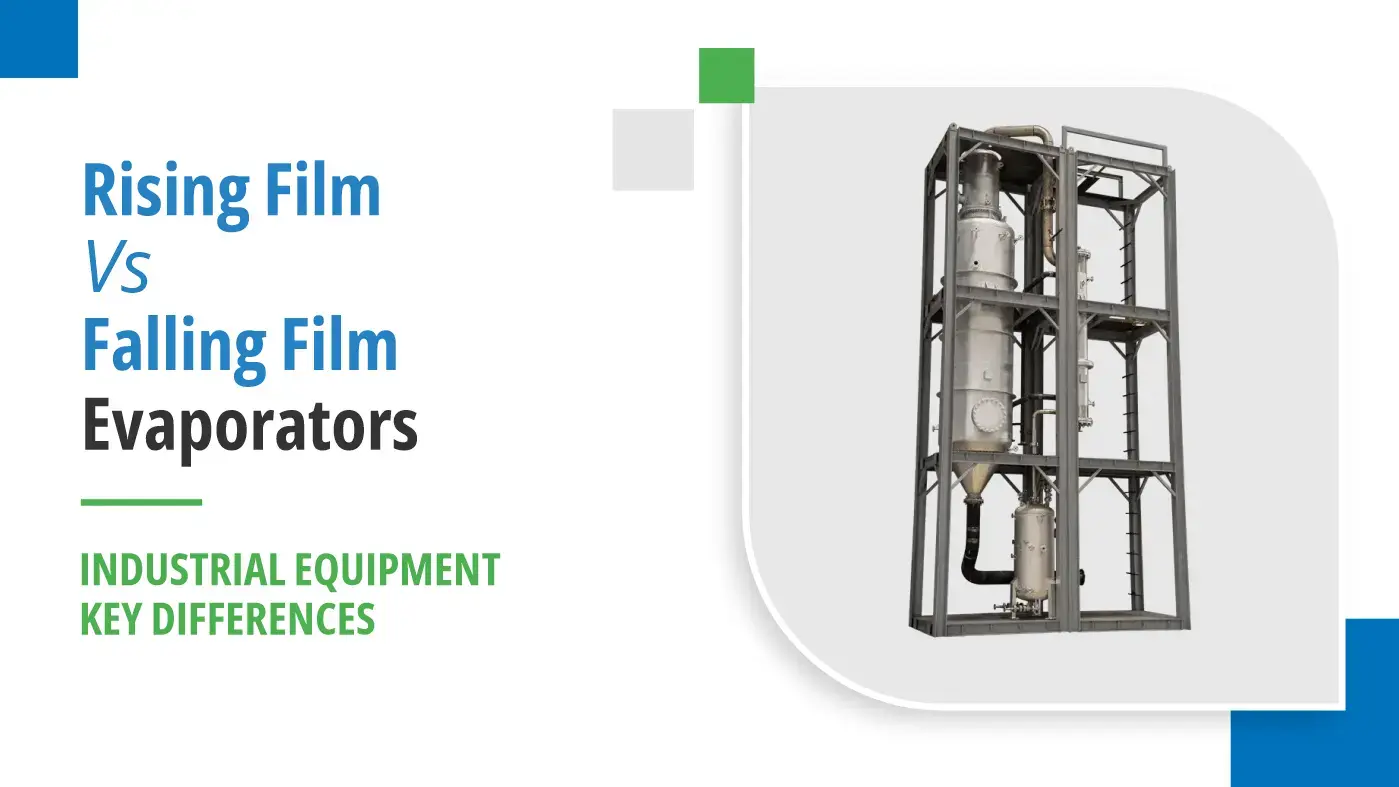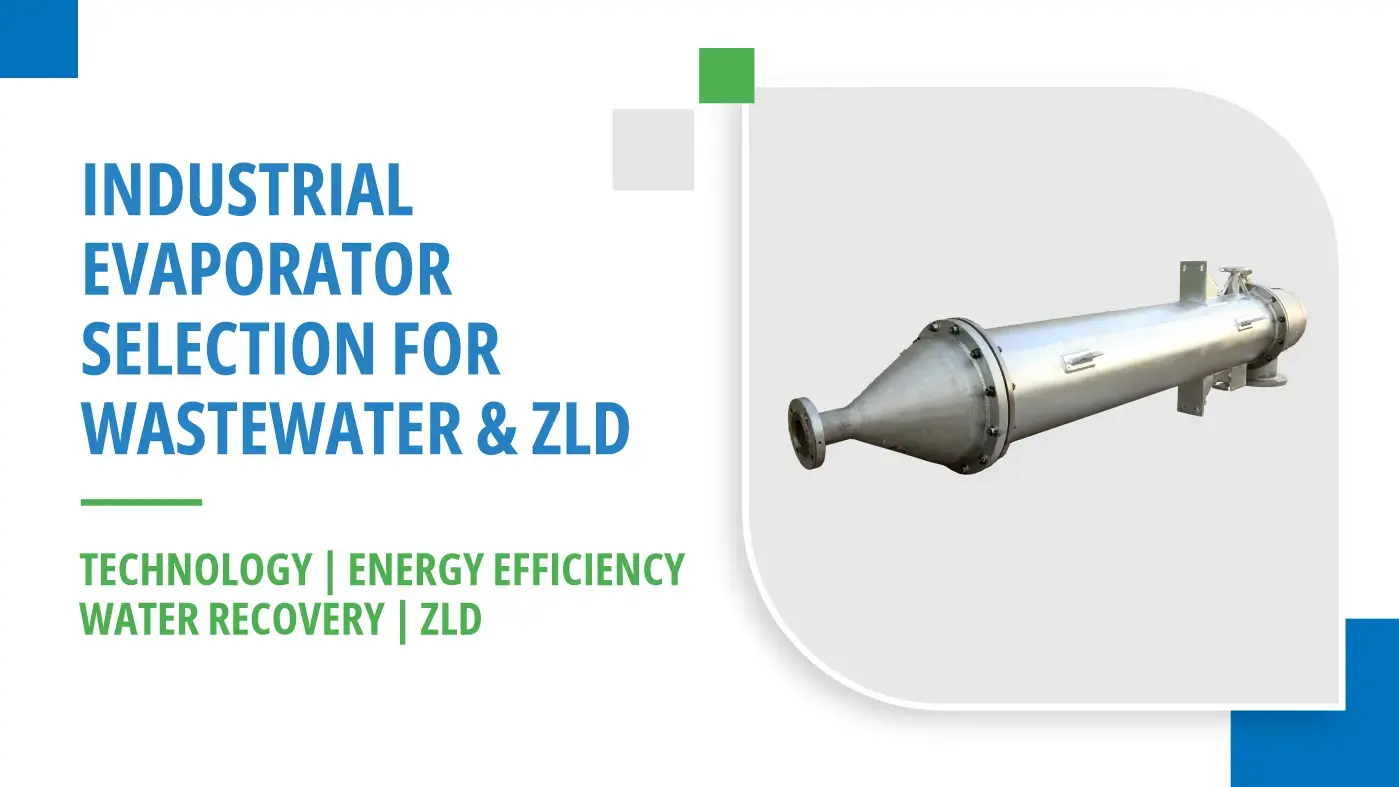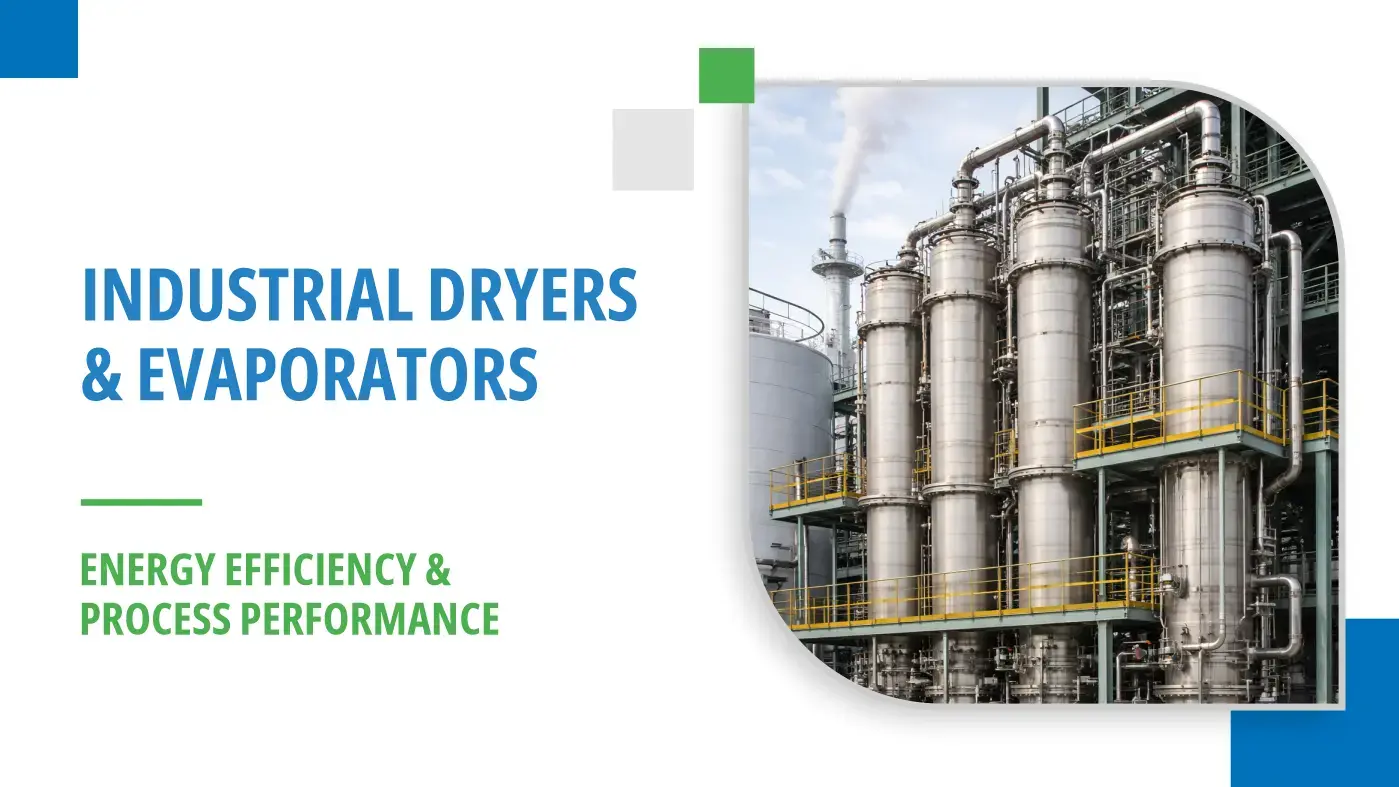
Rising Film vs. Falling Film Evaporators: How to Choose the Right Technology
Evaporation is an essential industrial process used to concentrate liquid solutions by removing solvents, usually water, through heat transfer. Industries such as pharmaceuticals, chemicals, food processing, wastewater treatment, and specialty chemicals rely on evaporation to improve product concentration, reduce transportation costs, and support downstream processing.
Two widely used technologies are rising film evaporators and falling film evaporators. Although both are designed to concentrate liquids efficiently, they differ in liquid flow direction, heat transfer characteristics, operating conditions, and suitability for heat-sensitive materials.
Choosing the right equipment depends on the feed's physical properties, viscosity, thermal sensitivity, required concentration, available utilities, and production capacity. Understanding these differences helps manufacturers select an evaporation system that meets process requirements while managing operating costs.
What Is the Difference Between Rising Film and Falling Film Evaporators?
How Does a Rising Film Evaporator Work?
A rising film evaporator, also known as an upward-flow tubular evaporator, uses heat to generate vapour that carries the liquid upward through heated tubes. As the liquid heats up, vapour bubbles form and create a two-phase flow that moves toward the upper section of the equipment.
The movement helps spread the liquid along the tube walls, supporting heat transfer and solvent evaporation. The vapour and concentrated liquid are subsequently separated in a designated separation chamber.
Rising film evaporators are suitable for certain low-viscosity liquids that can tolerate the operating temperature and flow conditions. Their performance depends on sufficient vapour generation, stable circulation, and appropriate feed characteristics.
How Does a Falling Film Evaporator Work?
A falling film evaporator distributes the feed liquid across the upper section of a vertical heated tube bundle. Gravity causes the liquid to flow downward as a thin film along the internal or external heated surfaces, depending on the equipment design.
Heat transfers through the tube walls, causing part of the liquid to evaporate. The resulting vapour and concentrated liquid move toward the lower separation section, where they are separated.
Falling film evaporators are particularly useful when processing heat-sensitive liquids because they can operate with short liquid residence times and relatively low temperature differences under suitable conditions. They are commonly considered for applications requiring efficient heat transfer and reduced thermal exposure.
What Are the Key Technical Differences Between These Evaporation Systems?
The principal difference is how the liquid moves across the heated surface. This affects film formation, heat transfer, residence time, and suitability for different feed materials.
|
Comparison factor |
Rising film evaporator |
Falling film evaporator |
|
Liquid movement |
Upward, driven by vapour generation and two-phase flow |
Downward, primarily driven by gravity |
|
Film formation |
Develops as liquid and vapour rise through heated tubes |
Feed is distributed over heated surfaces at the top |
|
Residence time |
Depends on tube length, flow rate, and operating conditions |
Can be short with suitable distribution and operating conditions |
|
Heat-sensitive products |
Suitability depends on thermal exposure and process design |
Often preferred where reduced thermal exposure is important |
|
Feed distribution |
Requires stable flow and appropriate vapor generation |
Requires uniform distribution across the heated tubes |
|
Viscous liquids |
Suitability depends on viscosity and circulation behavior |
High viscosity can impair film distribution and heat transfer |
|
Fouling potential |
Depends on feed chemistry, concentration, and tube conditions |
Depends on film uniformity, surface conditions, and feed properties |
|
Typical applications |
Suitable low-viscosity liquids that tolerate the process conditions |
Heat-sensitive and low-to-moderate-viscosity liquids where short residence time is beneficial |
Actual performance varies with equipment design, operating pressure, feed composition, and production requirements.
What Are the Main Features of a Rising Film Evaporator?
- Upward liquid flow: Vapour generation helps transport the liquid through heated tubes.
- Tubular heat-transfer surface: Provides the area required for evaporation.
- Vapour-liquid separation: Separates the concentrated liquid from generated vapour.
- Process adaptability: Can be designed for suitable industrial liquid concentration duties.
- Integration potential: Can be incorporated into multistage evaporation or heat recovery arrangements when the process permits.
What Are the Main Features of a Falling Film Evaporator?
- Top-mounted liquid distribution: Helps spread the feed across the heating tubes.
- Thin-film evaporation: Supports heat transfer across a wetted surface.
- Short residence time: Can limit thermal exposure when the equipment is correctly sized and operated.
- Vacuum operation capability: Reduces boiling temperature when lower-pressure operation is appropriate.
- Flexible process integration: Can be combined with condensers, vapour separators, and heat recovery systems.
Which Evaporator Delivers Better Product Quality and Process Results?
The right equipment is the one that consistently achieves the required concentration, product quality, throughput, and operating cost under actual production conditions.
How Does the Choice Affect Product Quality?
Falling film evaporation is often advantageous for temperature-sensitive products because the liquid can pass through the heated section quickly. This can help limit heat-related colour changes, flavour loss, degradation, or other unwanted reactions.
Rising film evaporation may perform well when the liquid has suitable flow properties and can withstand the thermal conditions required for evaporation.
The final outcome depends on more than flow direction. Operating pressure, heat-transfer coefficient, residence-time distribution, wall temperature, and feed composition all influence product quality.
|
Selection factor |
Rising film |
Falling film |
|
Driving force for liquid movement |
Vapour generation and two-phase flow |
Gravity, supported by proper feed distribution |
|
Heat-sensitive products |
Evaluate thermal exposure and residence time carefully |
Often a candidate when short residence time is beneficial |
|
Feed distribution |
Stable flow through the heated tubes is important |
Uniform distribution and adequate wetting are critical |
|
High-viscosity feed |
Evaluate flow and heat-transfer limitations |
Poor distribution and reduced heat transfer can become limiting |
|
Fouling or scaling feed |
Requires assessment of deposits and cleaning needs |
Requires assessment of surface wetting, deposits and cleaning needs |
|
Final selection |
Depends on feed properties and process conditions |
Depends on feed properties and process conditions |
These are general selection considerations, not universal performance rankings. Final suitability depends on feed composition, viscosity, solids content, boiling-point elevation, operating pressure, heat-transfer conditions, fouling behaviour and required product concentration.
How Can Manufacturers Improve Evaporation Performance?
- Match the equipment design to the feed's viscosity, boiling-point elevation, and solids content.
- Establish the required evaporation rate and final concentration before equipment sizing.
- Evaluate vacuum operation where lower boiling temperatures would benefit the product.
- Assess fouling and cleaning requirements using representative feed data.
- Consider multiple-effect evaporation or mechanical vapour recompression where technically and economically appropriate.
- Monitor product temperature, pressure, flow rate, and final concentration during operation.
These measures help improve process consistency, reduce avoidable energy use, and support reliable production.
How Should You Select an Evaporator for Your Industrial Application?
Selection should begin with process requirements rather than a preference for a particular technology.
A falling film evaporator is worth evaluating when the product is heat-sensitive, short residence time is important, and the feed can be distributed uniformly over the heated surfaces. A rising film evaporator may be appropriate when the feed is relatively low in viscosity, vapour-driven upward flow is suitable, and the product can tolerate the required thermal conditions.
Before finalising the equipment, engineers should evaluate:
- Feed flow rate, temperature, viscosity, and composition.
- Initial and target concentrations.
- Required solvent removal capacity.
- Thermal sensitivity and acceptable product temperature.
- Operating pressure and available heating utilities.
- Fouling tendency and cleaning requirements.
- Available installation space and process integration needs.
- Capital budget, operating cost, and expected production schedule.
A technical evaluation based on these parameters provides a stronger foundation for equipment selection than comparing purchase prices alone.
How Can Manufacturers Calculate Evaporation Capacity and Estimate Operating Costs?
Equipment selection should begin with a material balance. This establishes how much solvent must be removed to achieve the desired product concentration.
For a simplified process with a non-volatile dissolved solid, the following calculation can estimate the evaporation load.
Example:
Assume a plant processes 1,000 kg/h of feed containing 10% dissolved solids and needs a final product containing 40% dissolved solids.
|
Process parameter |
Value |
|
Feed flow rate |
1,000 kg/h |
|
Initial solids concentration |
10% |
|
Required final solids concentration |
40% |
|
Solids entering the system |
100 kg/h |
|
Final concentrated product |
250 kg/h |
|
Approximate water evaporated |
750 kg/h |
(750 kg/h is the estimated evaporation load, not the required evaporator heating capacity or a complete equipment sizing result.)
The calculation assumes that the dissolved solids remain in the product and that there are no material losses or other significant volatile components.
What Does This Calculation Tell Us About Equipment Selection?
The estimated evaporation load is approximately 750 kg/h. Engineers can use this figure as an initial input when evaluating heating surface requirements, steam demand, vapour handling, and potential heat recovery.
It does not, by itself, determine which evaporator is more efficient. A detailed design must also account for boiling-point elevation, heat transfer coefficients, fouling tendency, operating pressure, product temperature limits, and utility conditions.
|
Operating-cost parameter |
What to evaluate |
|
Steam consumption |
Steam required per kilogram of water evaporated |
|
Electrical demand |
Feed, circulation, condensate and vacuum-system equipment, as applicable |
|
Cooling demand |
Cooling-water flow, temperature rise and condenser duty |
|
Heat recovery |
Multiple-effect arrangements or vapour recompression, where feasible |
|
Cleaning and downtime |
Cleaning frequency, duration and production losses |
|
Product quality |
Concentration, thermal degradation and product recovery |
|
Lifecycle cost |
Capital, installation, utilities, maintenance and operating costs |
How Can Energy and Financial Performance Be Compared?
A useful comparison should include:
- Steam consumption per kilogram of water evaporated.
- Electrical power required by pumps and vacuum equipment.
- Cooling-water demand and condenser performance.
- Cleaning frequency and production downtime.
- Product recovery and quality.
- Capital investment and installation expenses.
- Annual operating cost and estimated payback period.
These measurements help buyers compare equipment options using consistent assumptions rather than relying on generic efficiency claims.
Why Choose ECOPROCESS Solutions for Industrial Process Equipment?
Selecting an industrial evaporator requires more than comparing equipment configurations. Feed characteristics, required evaporation capacity, product temperature limits, fouling tendency, available utilities and downstream process requirements all influence the final design.
ECOPROCESS Solutions offers evaporation technologies including rising film, falling film, forced circulation, agitated thin film and multiple-effect systems for applicable process duties. The appropriate configuration should be established through an assessment of the process requirements and expected operating conditions.
For an initial technical evaluation, buyers should prepare the feed flow rate and composition, inlet and target concentrations, operating temperature, required evaporation rate, available utilities and any known scaling or fouling concerns.
Planning an industrial evaporation project? Contact ECOPROCESS to discuss your process requirements and identify the evaporation technologies suitable for further engineering evaluation.
What Features and Benefits Should Buyers Evaluate?
Features to evaluate
- Equipment configuration matched to feed properties.
- Heating surfaces selected for the process duty.
- Vapour-liquid separators and associated process components.
- Vacuum and condenser integration, where required.
- Multiple-effect arrangements for heat recovery.
- Construction materials selected for chemical compatibility.
- Instrumentation and automation options.
Potential benefits
- Consistent concentration when the process is correctly designed.
- Better control over thermal exposure.
- Opportunities to reduce steam consumption through heat recovery.
- Improved solvent recovery and resource utilisation.
- More predictable maintenance and cleaning planning.
- Process data to support equipment sizing and future capacity planning.
Actual results depend on the selected technology, feed properties, utilities, and operating conditions.
Frequently Asked Questions
1. What is the main difference between rising film and falling film evaporators?
A rising film evaporator uses vapour generation to move liquid upward through heated tubes. A falling film evaporator distributes liquid at the top and allows it to flow downward over heated surfaces under gravity.
2. Which evaporator is better for heat-sensitive products?
A falling film evaporator is often preferred because it can provide short residence times and lower boiling temperatures when operated under vacuum. The final choice depends on the product's thermal sensitivity and process requirements.
3. Are falling film evaporators more energy-efficient?
Not necessarily in every application. Energy performance depends on feed conditions, heat-transfer efficiency, steam consumption, vacuum requirements, heat recovery, and the overall system configuration.
4. Can these evaporators operate under vacuum?
Yes. Both types can be incorporated into suitable vacuum evaporation systems. Vacuum operation lowers the boiling temperature, which may benefit temperature-sensitive materials.
5. Which evaporator is suitable for high-viscosity liquids?
Neither type is universally suitable for highly viscous liquids. Increased viscosity can reduce heat transfer and impair flow or film formation. A process assessment may identify another evaporation technology as a better fit.
6. What information is required to select an industrial evaporator?
Important inputs include feed composition, flow rate, viscosity, inlet temperature, initial and final concentration, required evaporation capacity, thermal sensitivity, fouling potential, and available utilities.
Conclusion:
Rising film and falling film evaporators serve different process needs. Rising film designs use vapour-driven upward flow, while falling film designs rely on controlled liquid distribution and downward flow across heated surfaces.
Falling film technology is often a strong candidate for heat-sensitive products requiring short residence times. Rising film technology can be suitable for compatible liquids where its flow characteristics meet process demands.
The most effective choice depends on product quality, throughput, energy consumption, fouling behaviour, maintenance, and total lifecycle cost. A process-specific engineering assessment helps ensure that the selected system meets production objectives reliably.
Planning an industrial evaporation system? Contact ECOPROCESS Solutions to discuss your feed characteristics, concentration targets, capacity requirements, and equipment selection needs.