How Equipment Maintenance and Process Control Reduce Manufacturing Variation and Improve Product Quality
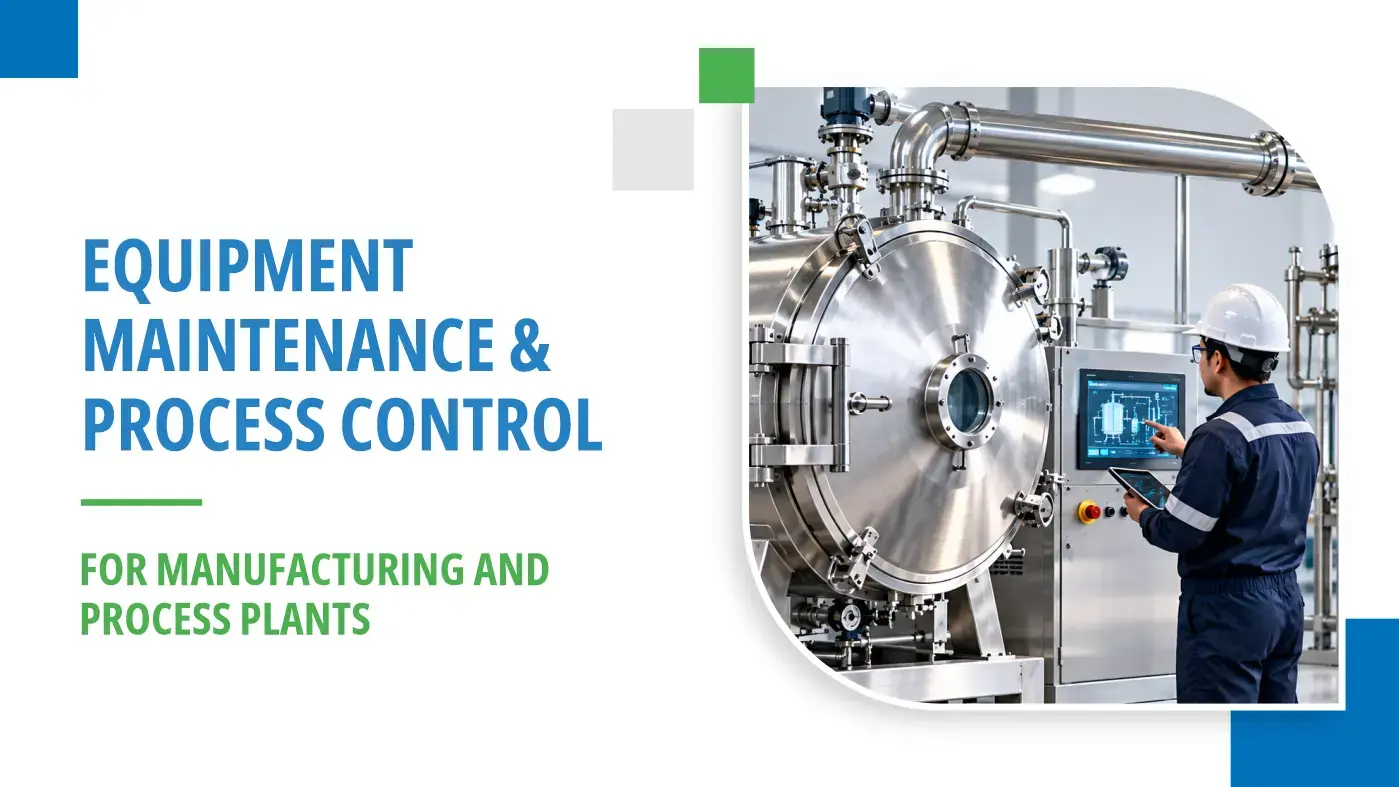
Consistent product quality is a critical requirement for modern manufacturing and process industries. However, maintaining consistent quality is not only a function of raw materials or final inspection. Production equipment maintenance and manufacturing process control must work together to keep operating conditions stable, reduce process variation, and improve production reliability.
Equipment such as vacuum pumps, vacuum boosters, evaporators, dryers, heat exchangers, reactors, and distillation systems can directly influence critical process parameters. Wear, leakage, vibration, fouling, incorrect calibration, or declining equipment performance can cause process conditions to move outside their desired operating range.
A coordinated approach to equipment maintenance and process control helps industrial plants identify these problems earlier and maintain more consistent production.
For Example: Pump wear or leakage → reduced pumping performance → unstable vacuum → changed evaporation/drying conditions → variation in process time or product characteristics
What Is the Relationship Between Equipment Maintenance and Process Control?
Equipment maintenance keeps machinery physically capable of performing its intended function, while process control keeps operating parameters within specified limits.
For example, a vacuum-based manufacturing process may depend on maintaining a particular vacuum level. If a vacuum pump develops a leak, experiences excessive wear, or becomes contaminated, its pumping performance can decline. The process control system may detect that the required vacuum is no longer being achieved.
In this situation, adjusting the process settings alone may not solve the underlying problem. Maintenance intervention may be required to restore equipment performance.
Therefore:
Equipment reliability + accurate measurement + process control = more stable production
This relationship is particularly important in industries where pressure, vacuum, temperature, flow, or residence time directly affects product quality.
How Can Equipment Problems Cause Process Variation?
Equipment maintenance helps maintain equipment performance, which supports stable process conditions and can therefore contribute to consistent product quality.
|
Equipment issue |
Possible process effect |
Potential production impact |
|
Vacuum leakage |
Loss of required vacuum |
Longer cycle time |
|
Pump wear |
Reduced pumping capacity |
Unstable process conditions |
|
Fouling |
Reduced heat-transfer performance |
Longer evaporation/drying time |
|
Valve malfunction |
Incorrect flow or pressure |
Process deviation |
|
Instrument drift |
Incorrect process feedback |
Incorrect control response |
|
Heat-exchanger fouling |
Reduced heat transfer |
Temperature deviation |
|
Seal deterioration |
Leakage/loss of containment |
Reliability and process issues |
How Does Equipment Maintenance Reduce Process Variation?
Process variation occurs when manufacturing conditions fluctuate from their target values. While some variation is unavoidable, excessive variation can lead to inconsistent products, waste, rework, and downtime.
Regular equipment maintenance can help reduce equipment-related sources of process variation by maintaining equipment performance within its intended operating range.
1. Preventing Equipment Performance Degradation
Industrial equipment gradually experiences wear during operation. Bearings, seals, valves, filters, mechanical components, and other parts can deteriorate over time.
Preventive maintenance allows these components to be inspected, serviced, cleaned, or replaced before their condition significantly affects production.
For vacuum applications, for example, maintenance can help identify issues that may contribute to declining pumping performance or unstable vacuum levels.
ECOPROCESS Solutions provides a range of industrial vacuum systems designed for different plant conditions and process requirements.
2. Maintaining Accurate Measurement
Process control depends on reliable measurements. Sensors and instruments used to measure pressure, temperature, flow, level, and other parameters must provide dependable information.
If an instrument becomes inaccurate, the control system may respond to incorrect information. This can result in unnecessary adjustments and additional process variation.
ISO 10012:2026 provides requirements for measurement management systems and is intended to help organizations ensure confidence in the validity and reliability of measurement results used in production, monitoring, testing and other operations.
3. Detecting Problems Before Equipment Failure
Predictive and condition-based maintenance can help identify equipment problems before they result in major failures.
Parameters such as:
- Vibration
- Temperature
- Pressure
- Motor current
- Pumping performance
- Energy consumption
- Leakage
- Operating hours
can be monitored to identify abnormal trends.
Instead of waiting for equipment to fail, maintenance teams can investigate changes in performance and take corrective action.
How Does Manufacturing Process Control Improve Product Consistency?
Manufacturing process control involves monitoring important production parameters and keeping them within defined operating ranges.
Depending on the application, these parameters may include:
- Temperature
- Pressure
- Vacuum
- Flow rate
- Product concentration
- Feed rate
- Liquid level
- Motor speed
- Heating or cooling conditions
When these variables remain stable, the manufacturing process becomes more predictable.
ISO describes the process approach as systematically managing processes and their interactions, with monitoring and measurement used to support control and improvement.
For manufacturers, this means process control should not be viewed simply as an automation function. It should be connected with maintenance, quality management, production, and engineering activities.
Why Is Vacuum Equipment Maintenance Important for Process Quality?
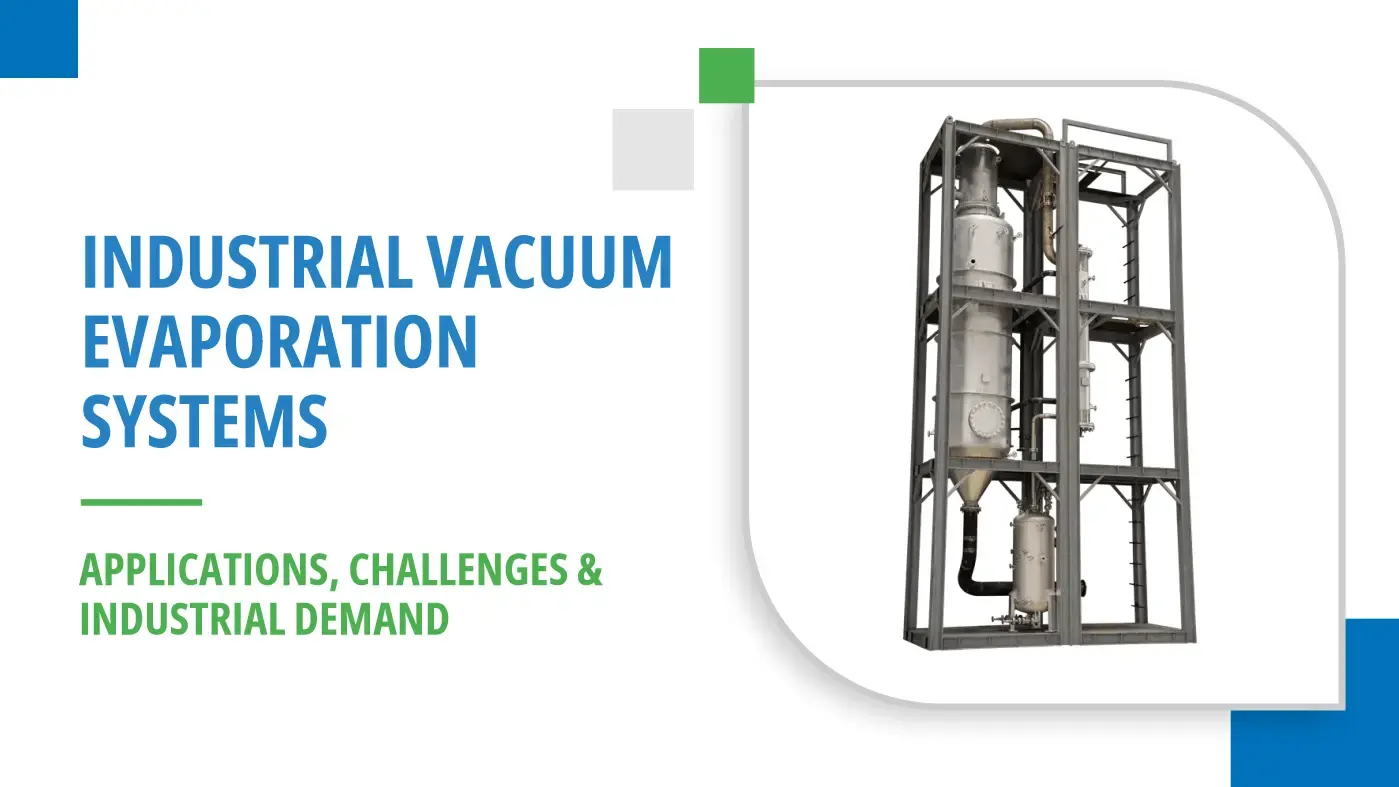
Vacuum systems are commonly used in processes such as evaporation, drying, distillation, degassing, solvent recovery, filtration, and chemical processing.
A change in vacuum performance can affect process conditions and therefore product characteristics.
For example, a process may require stable vacuum conditions to achieve a specific evaporation or drying performance. If pumping capacity decreases, the process may take longer or operate outside its intended conditions.
ECOPROCESS Solutions offers different vacuum technologies, including dry screw, claw, liquid ring, vane, piston, and mechanical booster technologies, depending on application requirements.
For wet gases, vapor-heavy applications and processes involving condensables, liquid ring vacuum pumps can be considered where their operating characteristics are suitable for the process duty. ECOPROCESS's ELRC liquid ring vacuum pump range is designed for applications including distillation, evaporation, solvent recovery, filtration, and degassing. Other applications may require dry screw, claw, rotary vane, rotary piston or mechanical booster configurations depending on vacuum level, gas/vapor load, temperature, condensability and process requirements.
For deeper vacuum and higher pumping-speed requirements, mechanical vacuum boosters can be integrated with primary pumps to improve system performance.
How Can Process Data Help Maintenance Teams?
One of the most effective ways to connect maintenance and process control is to analyze equipment and production data together.
Consider a process where vacuum pressure gradually becomes less stable.
Instead of immediately changing the process set point, the maintenance team can investigate:
- Has pump performance changed?
- Is there a possible system leak?
- Has the operating temperature changed?
- Is the pump handling a higher vapor load?
- Are filters or separators becoming restricted?
- Are sensors correctly calibrated?
- Has the equipment operating cycle changed?
This approach helps teams identify the root cause instead of repeatedly correcting the symptoms.
ECOPROCESS Solutions also provides information on maintaining and troubleshooting dry screw vacuum pumps, including issues related to contamination, temperature, mechanical problems, and pumping performance.
Preventive Maintenance vs. Predictive Maintenance
Both preventive and predictive maintenance can contribute to process stability, but they work differently.
Preventive maintenance follows a predefined schedule. Components are inspected or serviced at planned intervals based on operating hours, manufacturer recommendations, or plant requirements.
Predictive maintenance uses equipment-condition information to determine when maintenance may actually be required.
A modern industrial plant can combine both approaches.
For example:
Scheduled inspection → Condition monitoring → Performance analysis → Maintenance action → Process verification
This creates a continuous improvement cycle rather than treating maintenance as a separate activity.
What Are the Benefits of Integrating Maintenance and Process Control?
Integrating these functions can provide several benefits for manufacturing and process plants.
Reduced Process Variation
Maintaining equipment performance and controlling operating parameters can help keep production conditions closer to their target values.
Improved Product Quality
More stable process conditions can contribute to more consistent product characteristics and fewer quality deviations.
Lower Unplanned Downtime
Early identification of equipment deterioration can help prevent unexpected failures.
Reduced Waste and Rework
Better process stability can reduce the likelihood of producing batches or products that require reprocessing or rejection.
Improved Energy Efficiency
Poorly performing equipment may consume more energy while delivering reduced output. Monitoring equipment performance can help identify such inefficiencies.
Longer Equipment Life
Regular inspection and appropriate maintenance can reduce excessive wear and help protect critical production assets.
ISO 55001:2024 provides a framework for establishing, implementing, maintaining, and improving an asset management system, with emphasis on balancing asset performance, risk, and expenditure across the asset lifecycle.
How Can Industrial Plants Implement an Integrated Approach?
Manufacturers can follow a practical five-step approach:
Step 1: Identify Critical Equipment
Determine which pumps, vacuum systems, reactors, dryers, evaporators, heat exchangers, or other equipment have the greatest impact on production.
Step 2: Identify Critical Process Parameters
Define the parameters that directly influence product quality, such as pressure, vacuum, temperature, flow, and concentration.
Step 3: Establish Maintenance and Monitoring Procedures
Create preventive maintenance schedules and establish condition-monitoring practices for critical equipment.
Step 4: Connect Maintenance and Production Data
Compare equipment performance with process trends to identify relationships between machine condition and process variation.
Step 5: Apply Root-Cause Analysis
When a process deviation occurs, investigate whether equipment condition, instrumentation, operating parameters, raw materials, or other factors contributed to the problem.
This approach supports the continual-improvement philosophy used in modern quality management systems. ISO 9001:2026 provides requirements for establishing, maintaining and continually improving a quality management system, including process operation, performance evaluation, monitoring and measurement, and improvement.
What Should Manufacturers Monitor?
A useful equipment and process monitoring program should track both equipment health and production performance.
|
Equipment Parameters |
Process Parameters |
|
Vibration |
Pressure |
|
Temperature |
Vacuum level |
|
Motor current |
Temperature |
|
Pumping capacity |
Flow rate |
|
Energy consumption |
Feed rate |
|
Leakage |
Product concentration |
|
Operating hours |
Cycle time |
Comparing these datasets can help engineering and maintenance teams identify early relationships between equipment deterioration and process performance.
How to diagnose variation
1. Identify the process deviation
↓
2. Verify instrument accuracy
↓
3. Check equipment performance
↓
4. Compare historical operating data
↓
5. Check raw-material/feed variation
↓
6. Identify the root cause
↓
7. Correct the cause
↓
8. Verify process performance
How ECOPROCESS Solutions Supports Reliable Process Performance
Reliable process performance depends on selecting and operating vacuum and process equipment according to the actual process conditions. Factors such as operating pressure, gas and vapor load, temperature, throughput, material characteristics, and required pumping speed can influence equipment performance and process stability.
Application-Specific Vacuum System Selection
Vacuum systems need to be selected according to the specific requirements of the process rather than based only on nominal pump capacity. Parameters such as operating pressure, gas load, vapor load, temperature, pumping speed, and process throughput help determine the appropriate pump, booster, condenser, and supporting equipment configuration.
Vacuum Stability and Pumping Performance
Stable vacuum conditions are important for processes such as evaporation, drying, distillation, degassing, and solvent recovery. A vacuum system with adequate pumping capacity can help maintain the required operating pressure and avoid performance limitations from insufficient capacity or improper system sizing.
Handling Vapors and Condensables
Processes involving moisture, solvents, or other condensable vapors can place additional demands on vacuum equipment. System design may need to account for vapor load, condensation, temperature, and contamination. Technologies such as liquid ring vacuum pumps can be considered for applications where wet or condensable gas handling is required.
Process Equipment Integration and Reliability
Vacuum pumps, boosters, evaporators, dryers, condensers, and other process equipment need to operate as part of an integrated system. Appropriate equipment selection, process control, preventive maintenance, and monitoring can help reduce issues related to leakage, excessive loading, fouling, overheating, and unexpected downtime.
Engineering Support for Process Applications
Process equipment requirements can vary significantly depending on the feed material, operating conditions, production capacity, and desired output. Engineering evaluation of these parameters helps establish suitable equipment configurations and operating conditions for applications such as vacuum processing, evaporation, drying, distillation, solvent recovery, filtration, degassing, and Zero Liquid Discharge (ZLD).
ECOPROCESS Solutions provides application-focused vacuum and process equipment solutions based on the operating requirements of individual processes. Its approach considers factors such as vacuum level, pumping capacity, vapor load, temperature, throughput, and material characteristics when developing equipment configurations for industrial applications.
Frequently Asked Questions
What is the role of equipment maintenance in manufacturing quality?
Equipment maintenance helps keep machinery operating within its intended performance range. Regular inspection, preventive maintenance, calibration, and condition monitoring can reduce equipment-related process variation and unexpected downtime.
How does process control reduce product variation?
Process control continuously monitors critical parameters such as temperature, pressure, flow, and vacuum and helps keep them within defined operating limits. This makes manufacturing conditions more stable and repeatable.
Can poor equipment maintenance affect product quality?
Yes. Equipment wear, leakage, fouling, vibration, inaccurate instrumentation, and declining performance can change process conditions and potentially affect product consistency.
How can manufacturers reduce process variation?
Manufacturers can reduce variation by combining reliable equipment, accurate instrumentation, process monitoring, preventive or predictive maintenance, operator training, root-cause analysis, and continuous process improvement.
What equipment parameters should maintenance teams monitor?
Maintenance teams can monitor parameters such as vibration, temperature, motor current, pressure, pumping performance, energy consumption, leakage and operating hours. The appropriate parameters depend on the equipment type and process duty.
How does vacuum pump performance affect process stability?
Changes in vacuum pump performance can affect the vacuum level achieved by the process. In applications such as evaporation, drying and distillation, changes in vacuum conditions can influence process time, throughput and other operating conditions.
Conclusion
Production equipment maintenance and manufacturing process control should work as an integrated system rather than as separate functions.
Maintenance ensures that equipment remains capable of delivering the required performance, while process control keeps critical operating parameters within their desired ranges. When these functions are connected through monitoring, data analysis, calibration, and root-cause investigation, manufacturers can reduce process variation and improve production consistency.
For industrial plants using vacuum systems for evaporation, drying, distillation, separation, or other process technologies, selecting the right equipment and maintaining it properly is an important part of achieving reliable, repeatable production.
A practical objective is simple:
Maintain the equipment → control the process → monitor the results → identify variation → improve continuously.
That integrated approach can help industrial manufacturers improve product quality, reduce downtime, control operating costs, and build more reliable production processes.