Rotary piston VACUUM PUMPS
ET Series
Overview
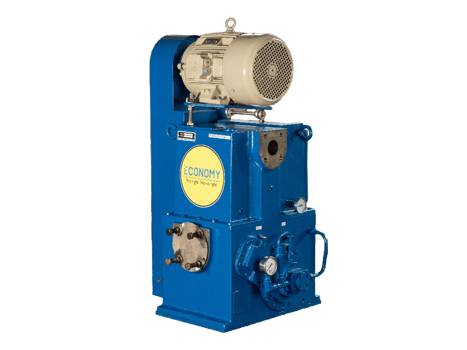
The ET series rotary piston pumps are engineered for deep, stable, heavy-duty vacuum performance in industrial environments. Designed with rugged mechanical compression and high tolerance to solvents and particulates, ET pumps deliver consistent vacuum levels even under large pressure differentials. Their simplicity, durability, and long service intervals make them ideal for solvent-rich processes and high-load, continuous-duty operations.

Applications & Industries
Applications
Resin & polymer processing
Chemical & petrochemical applications
Drying
Degassing
Filtration
metallurgical & heat-treatment process
Distillation
industries served
Pharmaceuticals
Chemicals
Specialty manufacturing
Petrochemicals
Plastics
Metallurgy
Key Features
-
Deep vacuum capability
-
Robust mechanical construction
-
Handles high-pressure differentials
-
Long operational life
-
Stable performance under heavy vapor loads
-
Low maintenance & easy service
-
Suitable for challenging process conditions
ET SERIES — MASTER SPECIFICATION TABLE
-
Model
Pumping Speed
(m³/hr)
Ultimate Pressure
(mbar)
Motor Power
(kW)
Oil Capacity
(L)
Weight
(kg)
ET 40
40
0.02
1.5
1.2
95
ET 65
65
0.02
2.2
1.5
125
ET 100
100
0.02
3.0
2.0
160
ET 150
150
0.02
4.0
2.5
190
ET 200
200
0.02
5.5
3.0
230
ET 300
300
0.02
7.5
4.2
290
(These values follow your catalogue’s numeric bands. If your catalogue includes more ET models, I can append them.)
FAQ
What are the main types of rotary piston vacuum pumps?
There are two main types of rotary piston vacuum pumps: single-stage and multi-stage. Single-stage pumps are designed for low to medium vacuum levels, while multi-stage pumps are capable of reaching higher vacuum levels.
How should rotary piston vacuum pumps be maintained?
To ensure that your rotary piston vacuum pump is operating efficiently, it is important to perform regular maintenance on the pump. This includes replacing the pump oil and filters, as well as inspecting the pump for signs of wear or damage. It is also important to follow the manufacturer’s recommended maintenance schedule for your specific pump.
How are rotary piston vacuum pumps tested before they are shipped to customers?
Rotary piston vacuum pumps are typically tested using a variety of methods to ensure that they meet the required performance standards. These tests may include pressure and vacuum testing, as well as performance testing under various load conditions. Additionally, the pump may be inspected for visual defects and overall quality before it is shipped to the customer.
What are some common applications of rotary piston vacuum pumps in the FMCG industry?
Rotary piston vacuum pumps are commonly used in the FMCG industry for a variety of tasks, including vacuum packaging of food products, removing air from packaging containers, and evacuating gas from bottles or cans. They may also be used in the production of beverages, where they are used to create a vacuum in the bottling process or to degas liquids.
What are rotary vane vacuum pumps, and how do they compare to rotary piston vacuum pumps?
Rotary vane vacuum pumps use a rotor with a number of vanes to move the gas through the pump. They are capable of achieving moderate vacuum levels and have a high flow rate, making them well-suited for high volume applications. They are generally less expensive than rotary piston vacuum pumps and have a simpler design, but they may not be as efficient and may require more maintenance.